
PSORIASIS CONTROL TREATMENT
Psoriasis is a chronic, relapsing inflammatory skin disease caused by a disorder in the differentiation and proliferation of keratinocytes, accompanied by immune inflammation. It is not contagious and is not an infection.
There are three main factors:
- Genetic – Immunological
IPsoriasis is strongly linked to genetic and immune factors, where individuals carrying the HLA-Cw6 gene have a higher risk, and an overactive immune system triggers T cells to release inflammatory cytokines, leading to excessive skin cell proliferation.
- Keratinocyte proliferation
In psoriasis, the skin cell turnover cycle accelerates from the normal 28 days to just 3–4 days, causing the skin to thicken, become red, and develop silvery scales.
- Triggering factors
Common triggers of psoriasis include stress, infections (especially streptococcal pharyngitis), skin trauma (Koebner phenomenon), certain medications like systemic corticosteroids or beta-blockers, as well as alcohol use and smoking.
SYMPTOMS

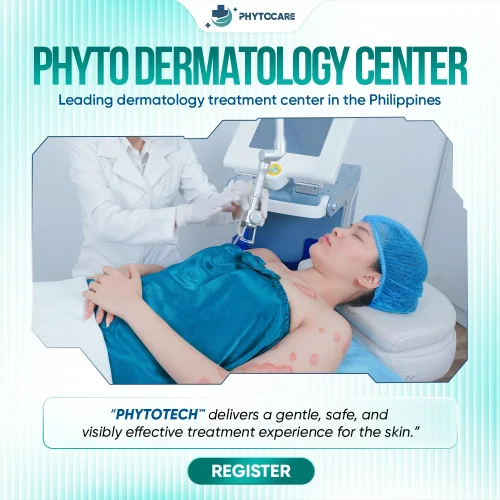



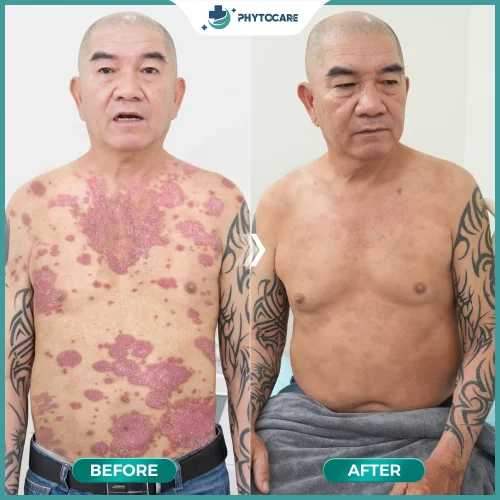
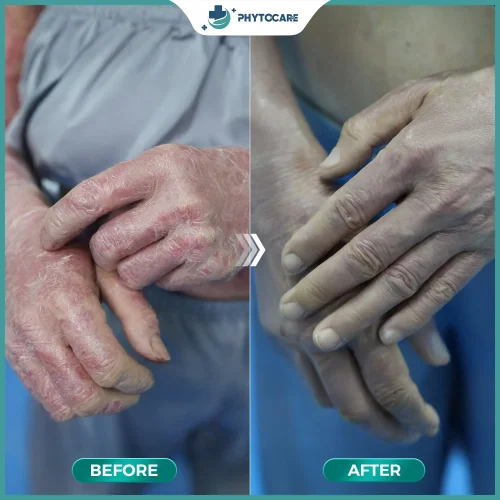
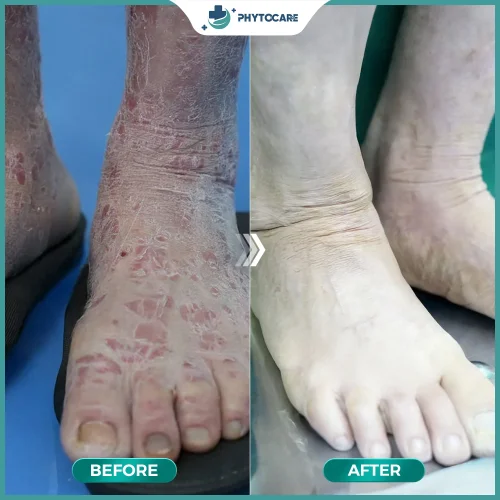
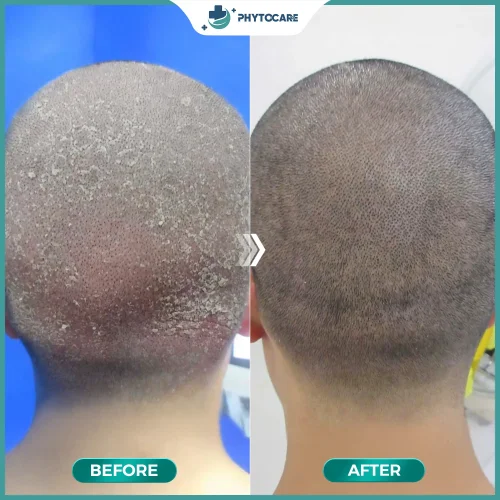
Psoriasis typically appears as well-defined red plaques covered with silvery-white scales, commonly found on the elbows, knees, scalp, and lower back, with characteristic signs like scaling, thin membrane, and pinpoint bleeding when peeled.
Patients may experience mild to moderate itching, along with nail changes such as pitting, thickening, or nail separation. In some cases, psoriatic arthritis can develop. Psoriasis has several forms including plaque, guttate, pustular, erythrodermic, and psoriasis affecting the scalp, nails, or skin folds.
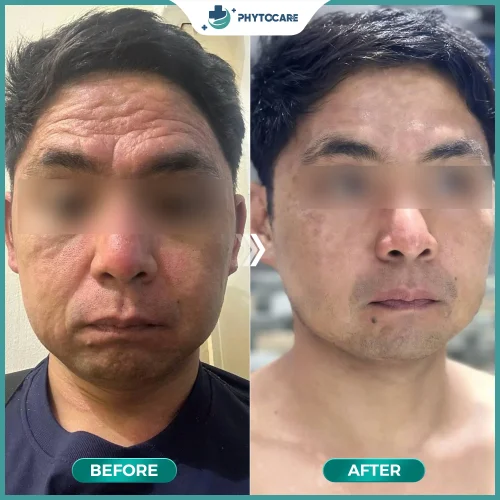
OVER 10000+ HAPPY CLIENTS
TREATMENT PROCEDURE
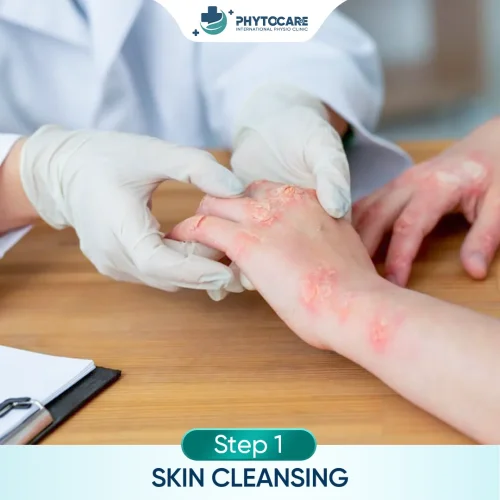
Step1 : Cleanse the treatment area to remove dust and other bacteria.
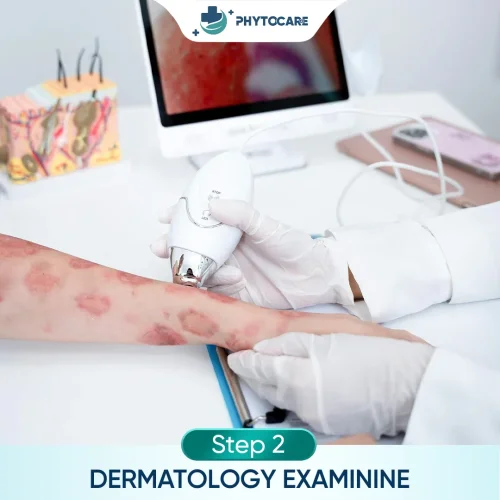
Step 2 : Dermatology examine
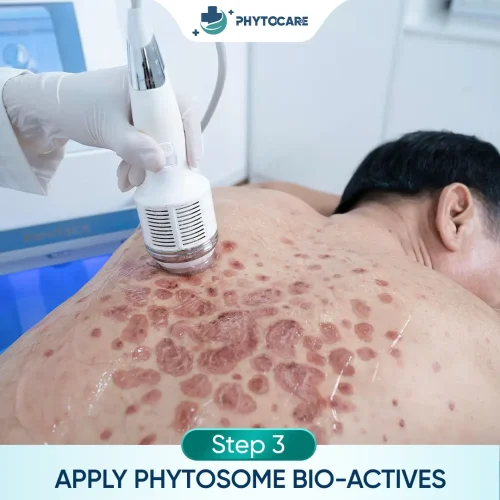
Step 3 : Apply Phytosome bio-actives to soothe, reduce redness and irritation, and regenerate damaged skin.
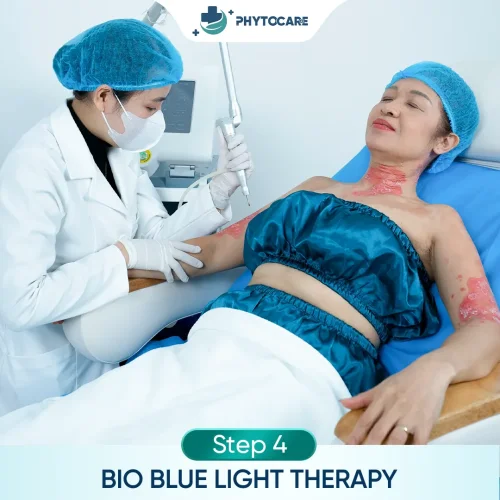
Step 4 : Use Bio Blue Light with appropriate energy
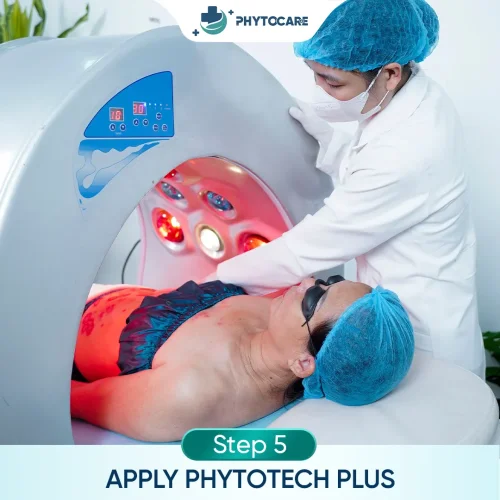
Step 5: In cases of severe infection, remove and clean inflamed areas and infected cells with Phytotech light technology.
Step 6: After treatment is complete, the doctor will provide instructions for home care, including the use of medication and cosmetics depending on the condition.

On average, patients require 5–6 sessions to achieve visible improvement. However, the exact number may vary depending on the severity of the condition and individual skin response.
Contact us now for best dermatology experts advice.